ARAVALLI BACHAO
Act now!
“If you were an alien or a space traveller some three billion years ago, the only discernible feature you would have seen which defined the northern margins of the landmass we call India would have been the Aravalli mountain range. It took nearly two billion years (3.2 to 1.2 billion years ago) of shoving and pushing of tectonic plates and magma outpourings to create these oldest fold mountains in the world. Since then, these mountains have endured millions of years of sustained assault of lava flows, submergence by seas, uplift by force of gushing magma from the depths of the Earth, collision with landmasses and erosion by wind and rain. But the Aravallis now struggle to survive the greed, pettiness and the extreme short-sightedness of politicians and corporations,” says Pranay Lal, author of Indica: A Deep Natural History Of The Indian Subcontinent (2016).
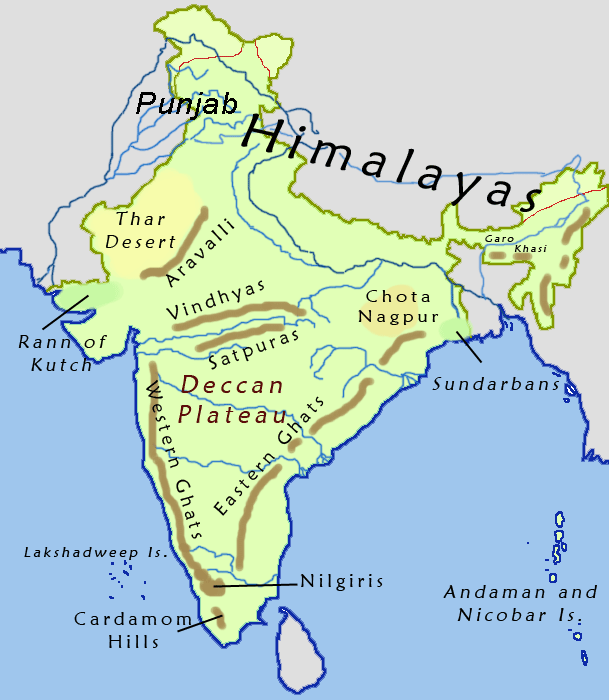
The Aravalli mountain range stretches for about 700 km across 4 states in North West India starting from Gujarat, then traversing through Rajasthan, Haryana and ending in Delhi, creating a picturesque backdrop for flourishing settlements, with its highest point at Guru Shikhar on Mount Abu in Rajasthan. At this point, the peak rises to about 1,722 m (5,653 feet). The hills in Delhi have an average elevation of 400-600 metres. The Aravalli range supports forests, water bodies, wildlife, famous forts, temples and archaeological cave paintings of historical importance. The landscape of the Aravallis, its geology, geography, forests, soils and water have defined the history, culture and environment of North West India for eons and remains an integral part of the future of this region as this range has a pronounced impact on the biodiversity, micro climate, air quality and the hydrological status of this entire belt.
WHO WE ARE?
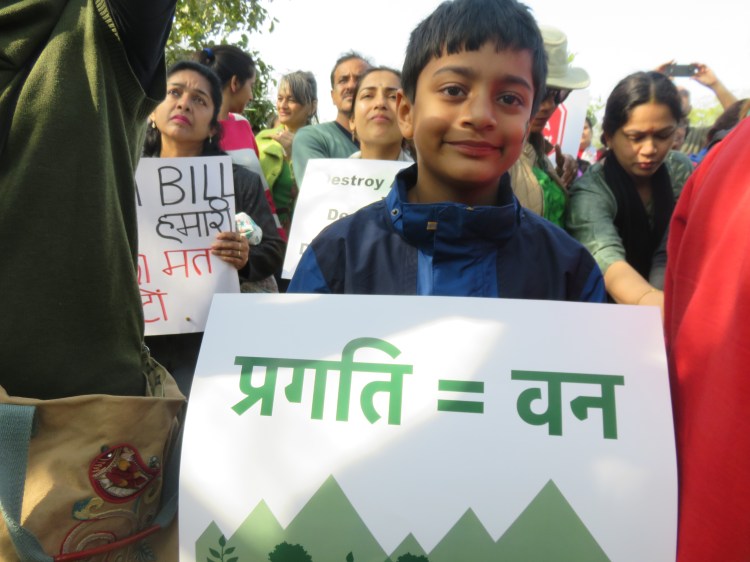
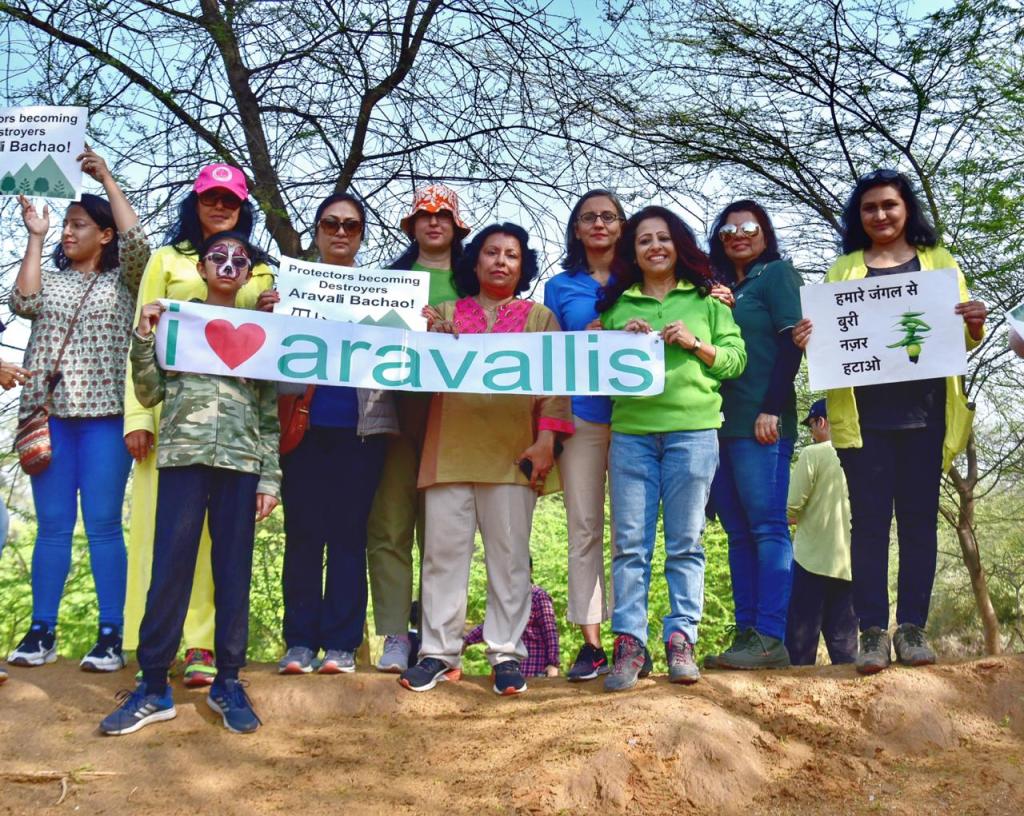
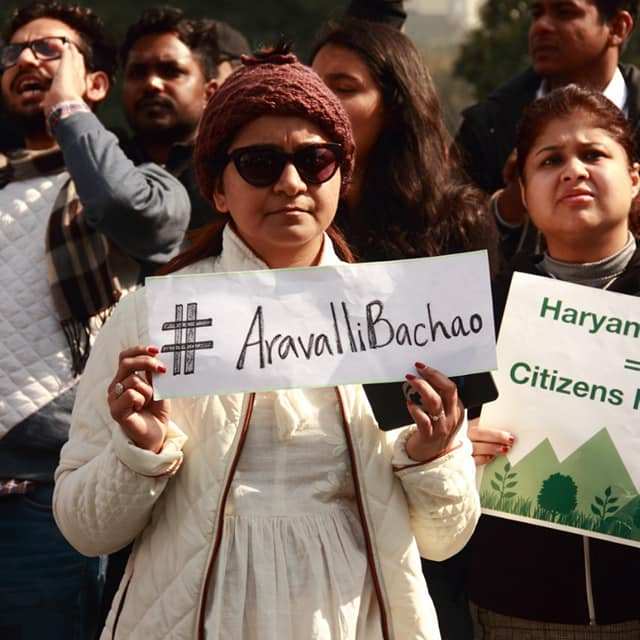
Aravalli Bachao Citizens Movement is a non-partisan group of citizens from the National Capital Region and across India. This group has no political or religious or corporate leanings or affiliations. It is a purely citizen driven movement to save the Aravallis from destruction by mining, real estate, illegal encroachments, dilution of protective laws, toxic landfills, waste to energy plants and other such activities. Our group’s overwhelming demand is for the entire 700 km Aravalli range to be seen as one living ecosystem and declared a permanent biosphere reserve so North West India’s climate regulator, shield against desertification, critical water recharge zone, biodiversity hotspot and wildlife corridor can be protected for our future generations.
FOLLOW US ON SOCIAL MEDIA
Follow us on Twitter: @AravalliBachao
#AravalliBachao #SaveOurAravallis
#NoMiningInAravallis #RemoveIllegalEncroachments #RemoveBandhwariLandfill #NoWTEinAravallis #EnforceSWMrules
Follow Aravalli Bachao on FB and Insta using these links:
https://www.instagram.com/aravallibachao/
https://www.facebook.com/aravallibachao/
Write to us on Email id: abcmtrust@gmail.com
ONGOING SIGNATURE CAMPAIGNS
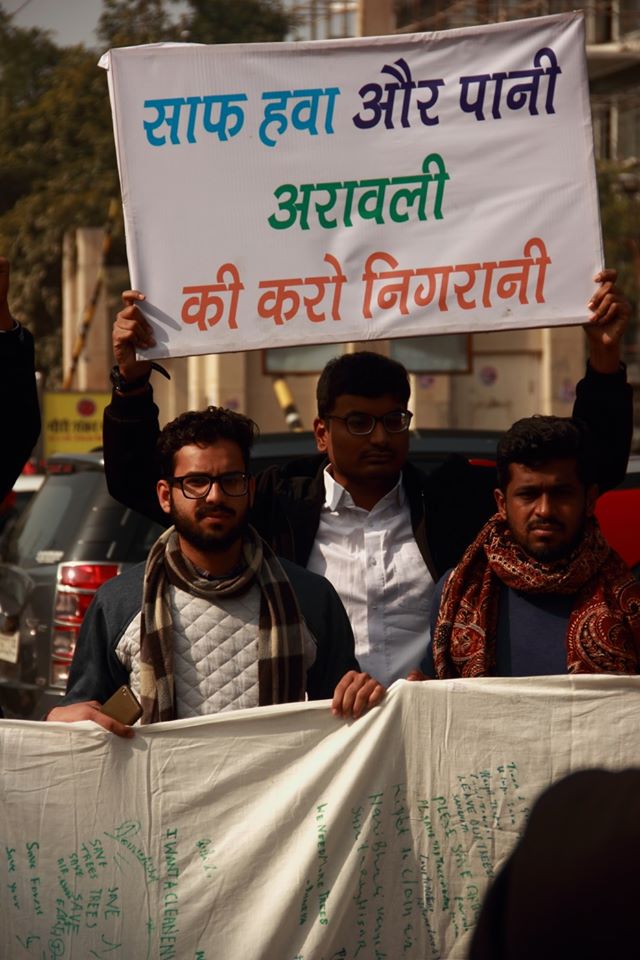
Sign and share these emails & petitions in your circles to save the NCR Aravallis.
1) Change.Org petition launched on Haryana Day, 1st November 2021 giving demands of citizens to Haryana government to save the Aravallis.
https://www.change.org/SaveOurAravallis
2) Change.org petition to remove Bandhwari landfill and cancel plan for making waste to energy plant in the Aravallis.
English petition link: http://change.org/RemoveBandhwariLandfill
Hindi petition link: http://change.org/BandhwariLandfillHatao
3) Email campaign asking India’s Environment Minister for revoking the permission given for building waste to energy plant in the NCR Aravallis.
https://www.letindiabreathe.in/CancelWTESaveAravallis
4) Email campaign to save 20,000 acres of Aravallis in Faridabad from being excluded from the Natural Conservation Zone.
https://www.letindiabreathe.in/SaveAravalliNCZ
5) Email campaign to say no to legalising mining in the Aravallis and stop illegal mining.
https://linktr.ee/Aravalli_Bachao
NOTE: All above emails can only be sent from mobile phones. The links do not work on laptops.
IMPORTANCE OF THE ARAVALLI ECOSYSTEM
As one of the oldest fold mountains in the world, the Aravallis have had a profound impact in influencing the global climate. Some 750 million years ago, a massive Malani volcanic eruption created the mesa upon which Jodhpur’s Mehrangarh fort stands today. At that time, our planet was covered from pole to pole by ice, a condition which palaeontologists christened Snowball Earth. The copious lava flow from the Malani event was, perhaps, the first trigger to liberate Earth from the grip of ice and eventually led to the explosion of multicellular life on the planet. Apart from the importance of the Aravallis as the world’s oldest fold mountains, below are a few reasons why the Aravalli Bachao Citizens Movement campaigns to save this ancient range.
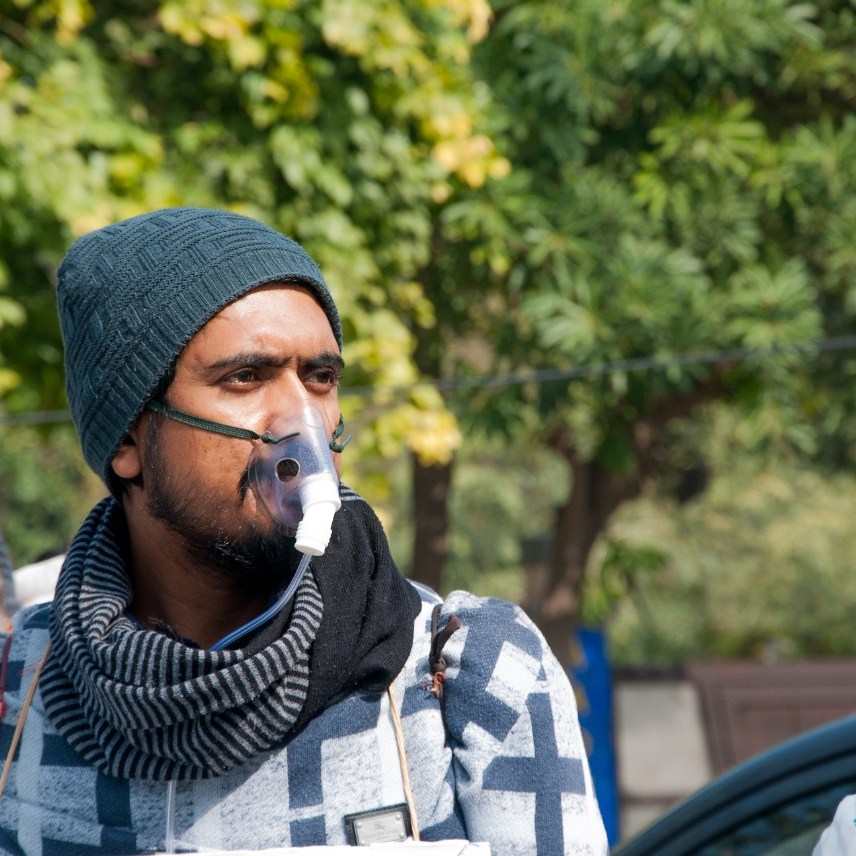
1) Aravalli forests act as the green lungs for North West India and particularly the country’s National Capital Region (NCR), whose cities are included in the list of 20 most polluted cities in the world.
2) Aravallis form a natural barrier checking the spread of the Thar desert towards eastern Rajasthan, Western Uttar Pradesh, Haryana, Delhi-NCR region and the rich alluvial region of the Indo Gangetic plains. Sadly over the last few decades, the degradation of the hills has been to such a massive extent that where in 1972-75 they stretched out over 10462 sq km, in 2018, they have been reduced to merely 6116 sq km. In all, 12 breaches in the Aravallis have opened up extending from Ajmer to Jhunjhunu in Rajasthan and the Mahendragarh district in Haryana from which more dust from the Thar desert is blowing into Delhi-NCR. India’s National Capital Region and North West India will become a desert if the Aravallis are not preserved.
3) Aravalli hills act as a critical water recharge zone for entire North West India from where they pass. With their natural cracks and fissures, the hills have the potential to put 2 million litres of water per hectare in the ground every year. The groundwater aquifers under the Aravalli hills hold immense quantities of water and act to release it slowly. These aquifers are interconnected and any disturbance or alterations in the pattern can significantly alter the groundwater table. For the water starved areas of Gurgaon, Faridabad, Delhi, South Haryana, Rajasthan where the extraction is 300% more than the recharge and ground water levels are dangerously low, Aravallis are the lifeline for water.
4) Aravallis play a very important role in impacting the climate of the entire North Western region in India and beyond. During monsoons, the mountain range gently guides the attenuated monsoon clouds eastwards towards Shimla and Nainital, thus helping nurture the sub-Himalayan rivers which feed the north Indian plains. In the winter months, the Aravalli range protects the fertile alluvial river valleys of the Indus and Ganga from the assault of the cold westerly winds from Central Asia.
5) Natural ecosystem of the Aravallis are a critical wildlife habitat & corridor and a biodiversity hotspot with 400+ species of native trees, shrubs, grasses and herbs; 200+ native & migratory bird species, 100+ butterfly species, 20+ reptile species and 20+ mammal species including leopards, hyenas, jackals, neelgais, porcupines, mongoose, civet cats as well as other wildlife like insects, amphibians etc. Every summer night from the crevices of the rocks on the Madar hill, opposite the Mayo College in Ajmer, Rajasthan emerges a creature that exists here, and nowhere else, and it has a feature that no other of its kind has. Aravallis are home to this fluorescent Gecko that emits a faint yet discernible glow which, perhaps, aids it to hunt at night. There is very little known about this enigmatic gecko. Only a handful of experts know of it and even fewer have seen it. There are also endemic plants, mushrooms, spiders, frogs, snakes and many other creatures that exist only in the Aravallis. Many of these are under-studied and their abundance is unknown. It is critical to save the home of the native flora and wild creatures that have inhabited the Aravallis for eons.
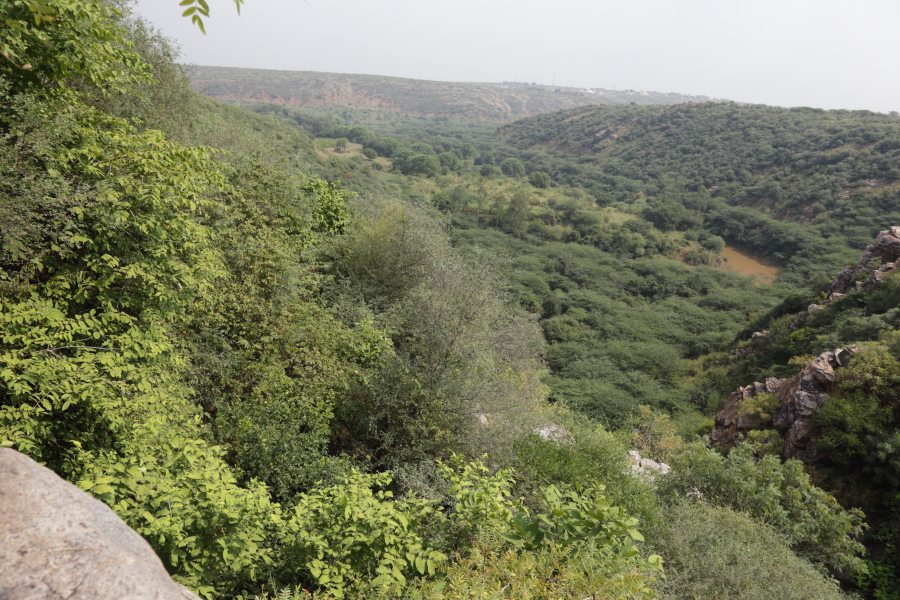
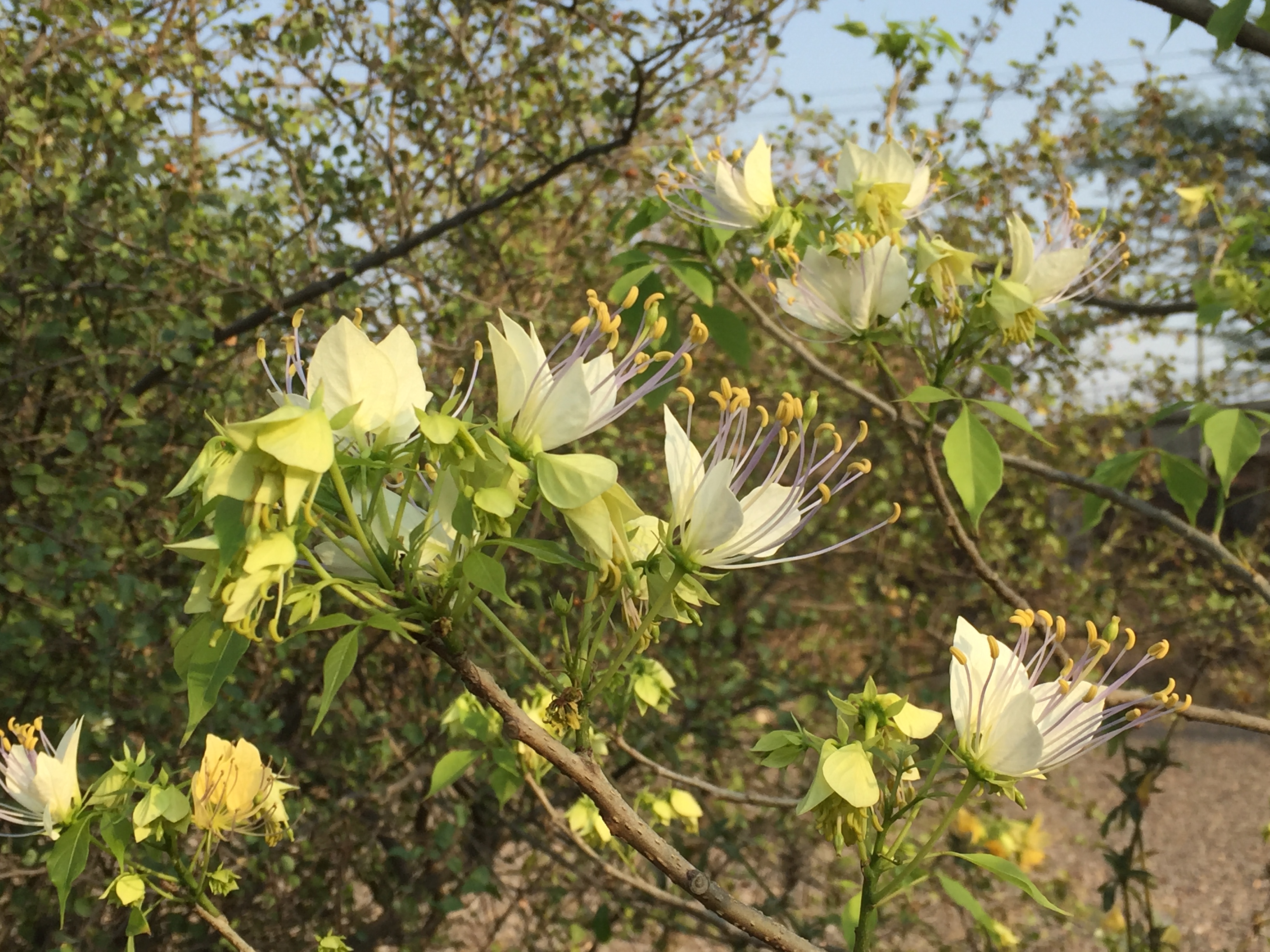
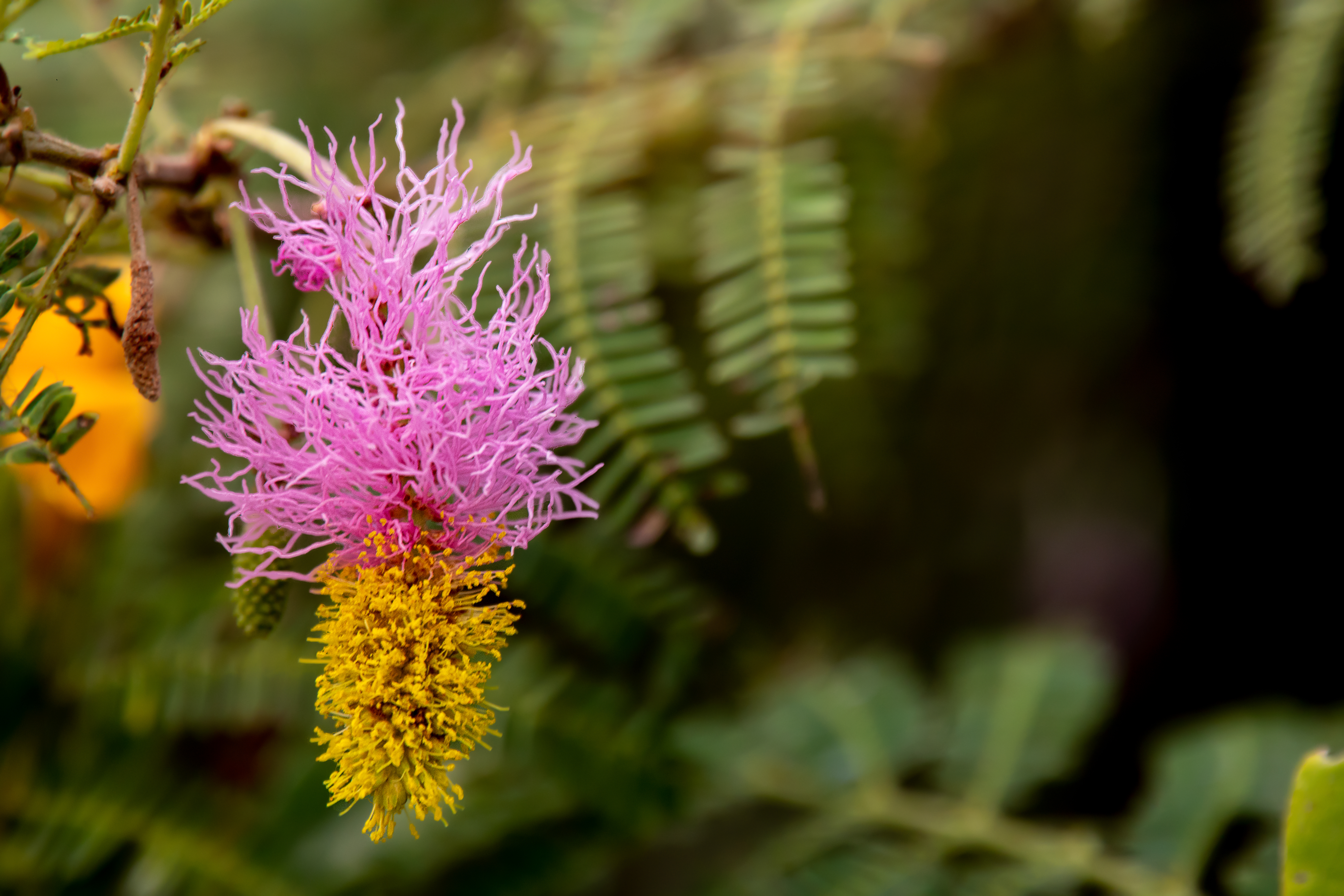
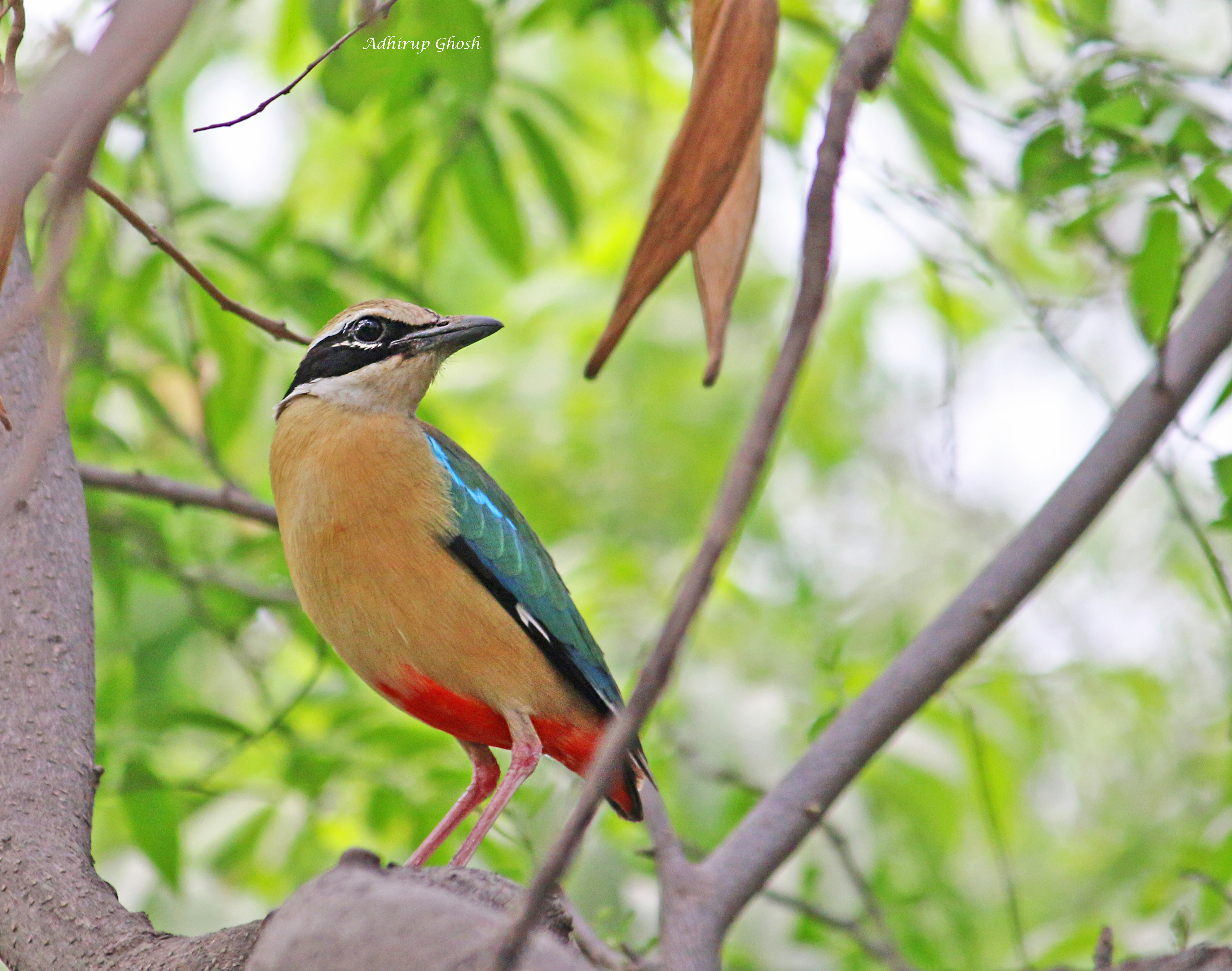
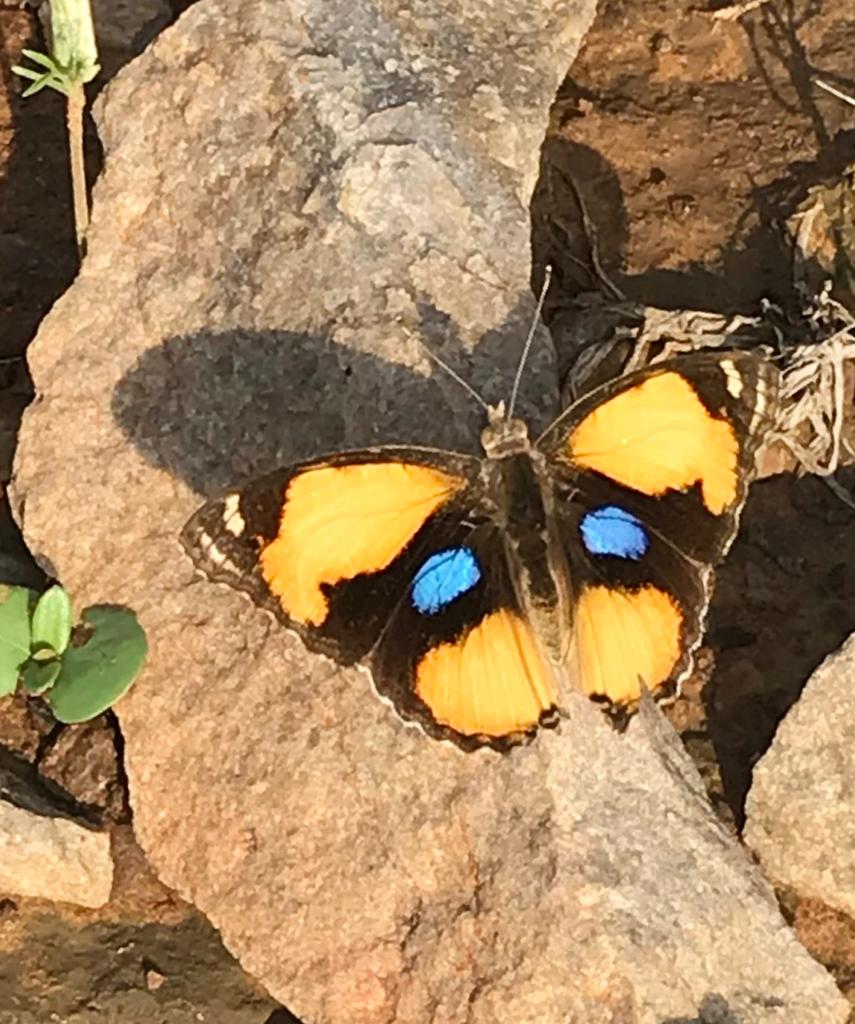
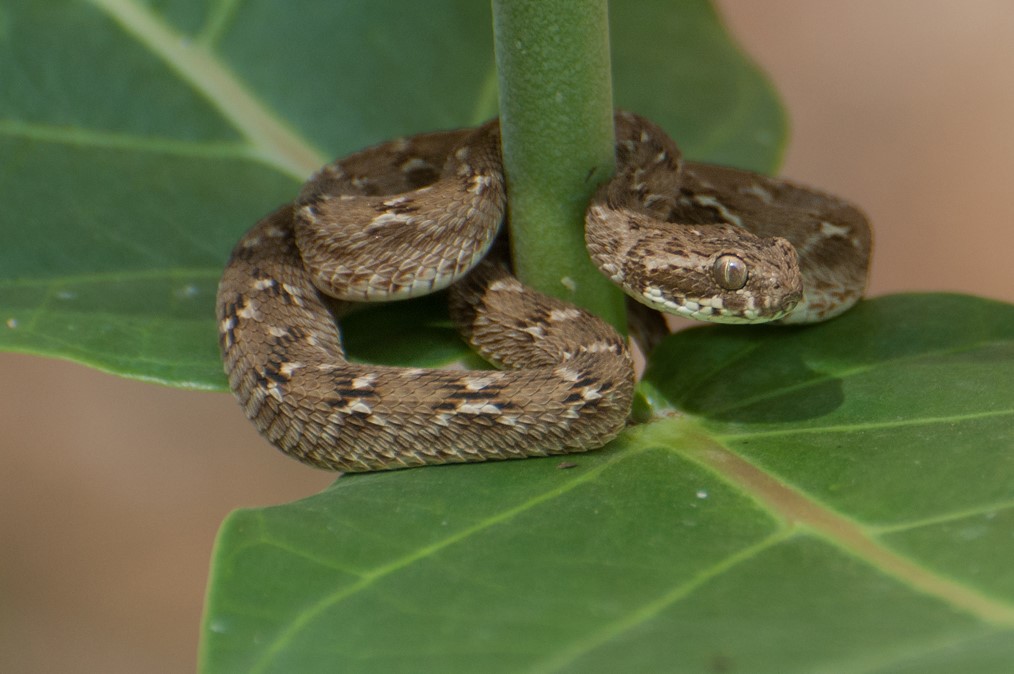
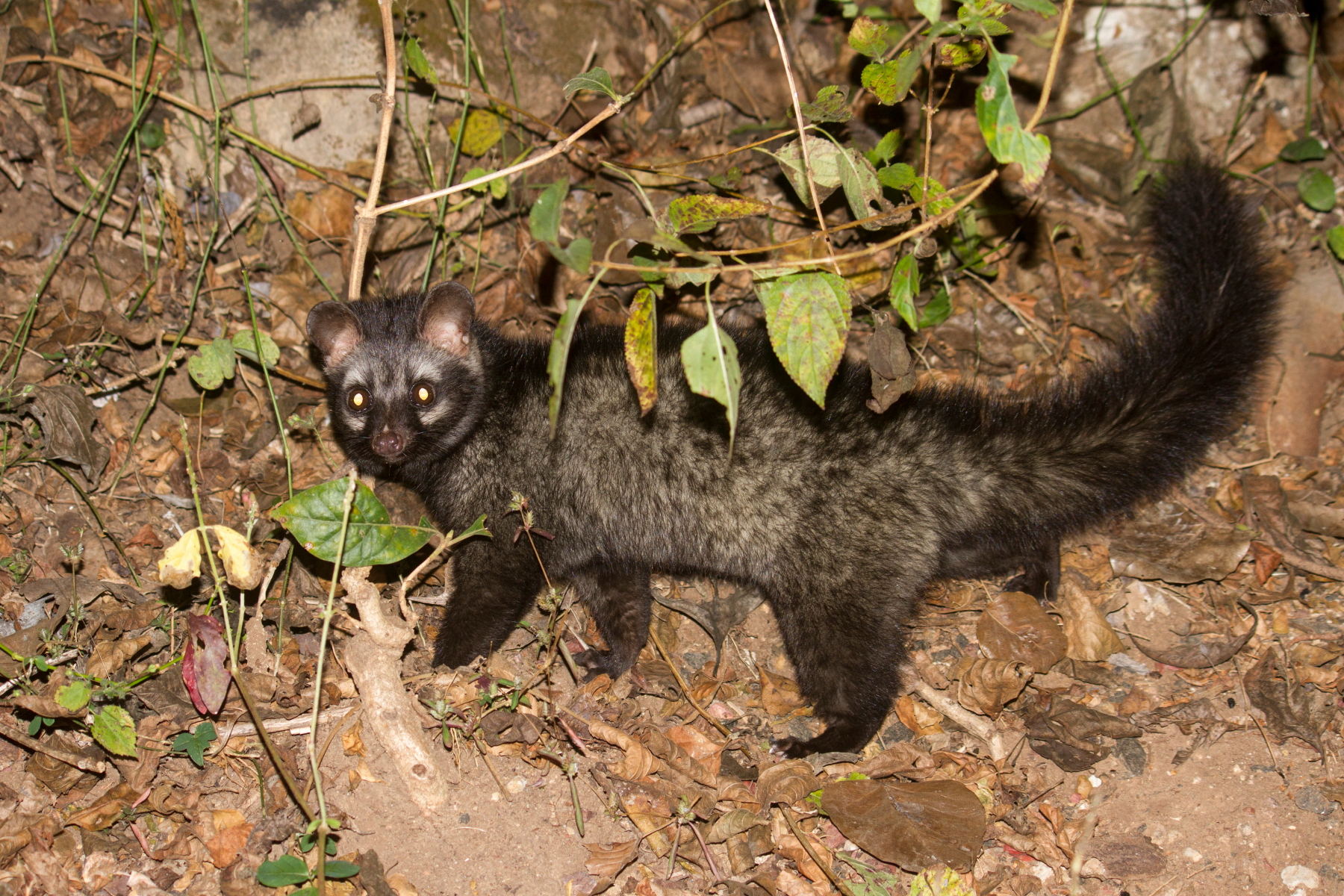
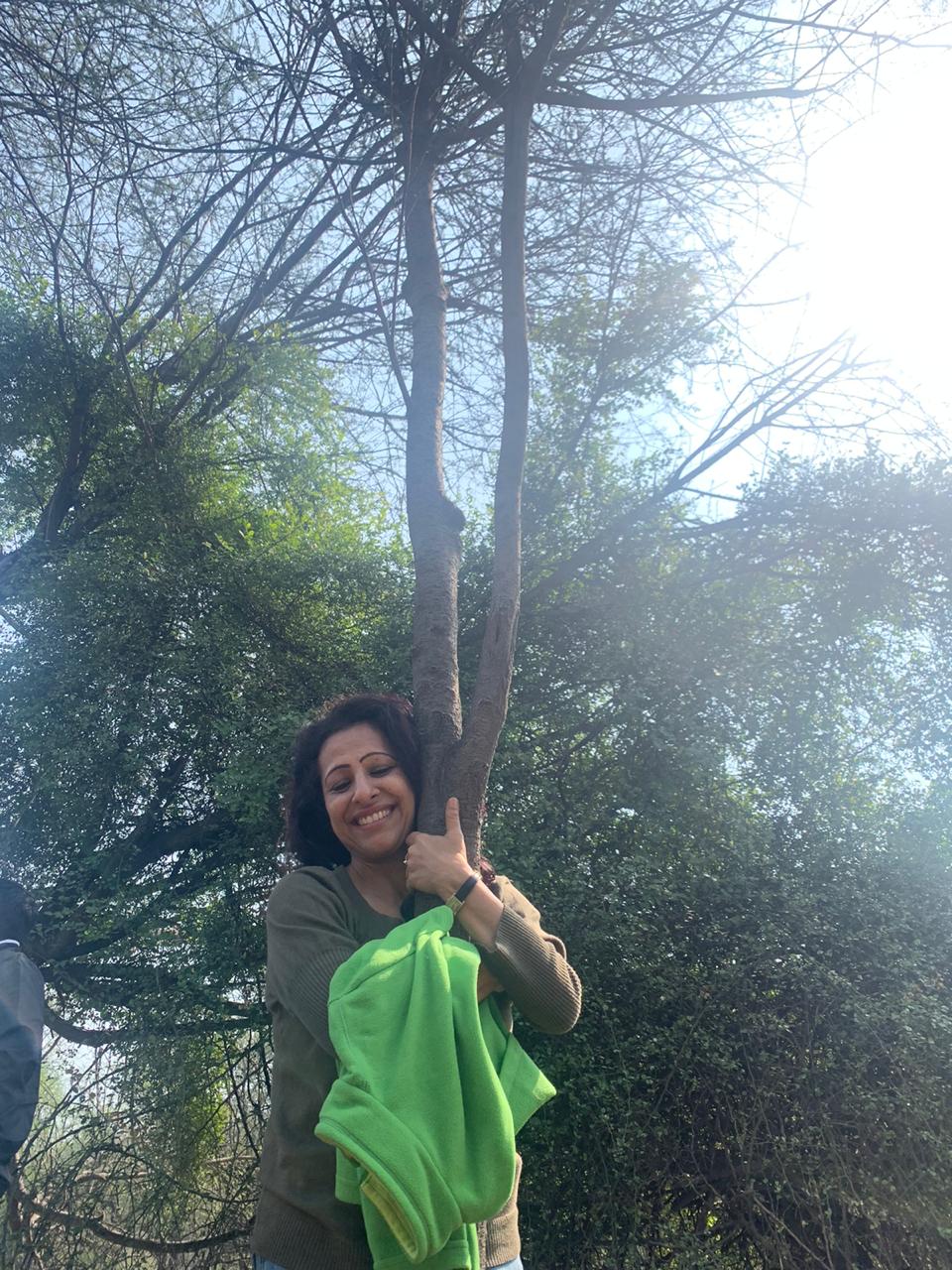
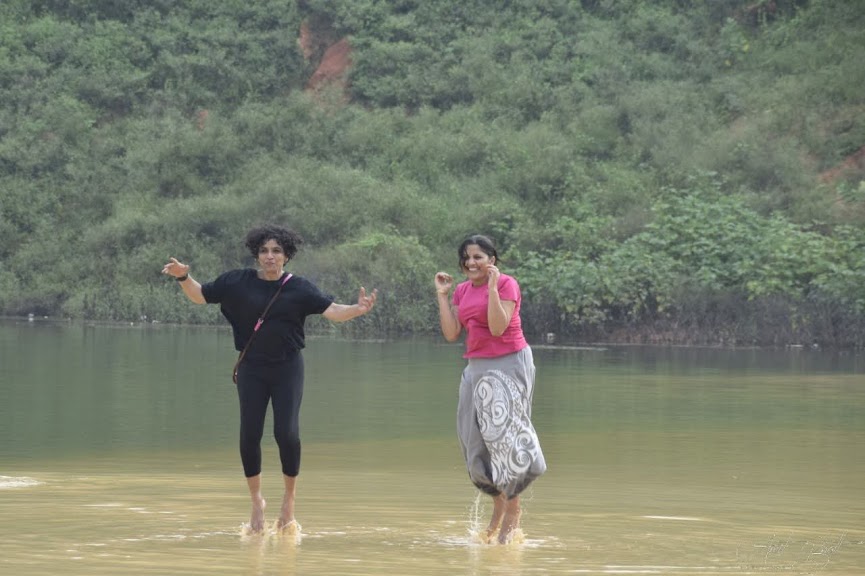
6) People living in the highly concretised cities of India’s National Capital Region and along the entire Aravalli range find their nature connect in these hills and forests. The hills and forests of the Aravallis are home to many wildlife species where bird-calls, rustling of leaves and howl of the jackals are still the only sounds you will hear. These are areas where time seems to have stood still. Areas where the leopard still stalks its prey, where porcupines and neelgais still traverse the rocky, thorny forest trails and where you still come across cowherds and agrarian communities who have not yet found their way to our industrialised way of life. The Aravallis are very popular for birding, wildlife watching, photography, forest bathing, walking, running, cycling, rock climbing, camping, other adventure activities. The forests also provide quiet places for people to meditate, find joy and healing in nature.
7) The 3 billion years old Aravallis are a geological marvel that have impacted the flow of rivers in India’s North West region. The range assembled over a very large province of Granite (called the Bundelkhand craton which is a part of the Earth’s crust which has been stable for nearly a billion years or so) and Gneiss (pronounced “nice” which is typically a hard, grey rock with long, white or grey ribbon-like bands). The Gneiss and Granite hills pop up east of Dungarpur, Udaipur, Nathdwara, Bhilwara and end close to Ajmer. Over the next several hundred million years, other rocks gradually assembled above and around this Granite and Gneissic province. These included new and younger varieties of Granite, Marble, Quartzite (the dominant rocks in Jaipur and Delhi), Sandstone, Rhyolite (a gorgeous smooth volcanic rock) among others. An official map of Delhi by the Geological Survey of India shows that the Aravallis have prevented the spread of sediments brought down by fast-flowing rivers that emerged from the young Himalayan ranges. Soil scientists believe that the alluvium that lies east of Delhi is the Varanasi or “older” alluvium deposited between 32 million and about half a million years ago. To the west of the Delhi Ridge lies the Ambala or “younger” alluvium (aged only 26,000 to 12,000 years old) which overlies the “older” alluvium.
It must be pointed out that the Aravalli range travels beyond Delhi under the ground up to Haridwar after which it disappears. The solid, often impervious, underground rocks of the Aravallis are a defining geological and geographical feature of this region. The hidden limb of the Aravallis that extends from Delhi to Haridwar creates a divide between the drainage of rivers of Ganga and Indus.
8) Aravallis are a treasure trove of India’s history. There are over 40 sites in south Delhi and adjoining Haryana where historians Dilip K. Chakrabarti and Nayanjot Lahiri found ancient stone tools. These tools are from the lower Palaeolithic period to the Mesolithic period. Four of the seven historical cities that stood in the Delhi area were directly on the Aravallis—the medieval cities of Lal Kot, Qila Rai Pithora, Mehrauli and Tughlaqabad.
 Aravalli Bachao